
Learning Chinese grammar from outdated textbooks or through English? For thousands of students in Europe, this is still a daily reality. However, the international ChinGram project, initiated by Palacký University in Olomouc, aims to change that once and for all. Together with experts from four other European countries, the project is developing a unique online platform that will offer a modern, free, and easy-to-understand explanation of Chinese grammar directly in the students’ native languages. Dr. Michaela Zahradníková, the project’s principal investigator, describes how this ambitious digital tool is being developed.
Chinese has become one of the most important languages of the 21st century, and interest in studying it is enormous—not only in Europe. For example, in Italy and Germany, thousands of young people are studying it at universities and high schools, and hundreds of enthusiasts and future professionals can also be found in the Czech Republic, Poland, and Denmark.& nbsp;Nevertheless, teaching this typologically distinct language faces an unexpected barrier—a chronic shortage of modern and easily accessible materials. “Most high-quality online resources are available exclusively in English, which forces students into a demanding mental triple challenge: while trying to understand Chinese grammar, they must constantly switch between Czech, English, and Chinese itself,“ says Dr. Michaela Zahradníková, an assistant professor in the Department of Asian Studies and the principal investigator of the ChinGram project. According to expert research, however, this process significantly slows down learning and often leads to misunderstandings.
As a result, teachers at universities and high schools in many European countries are forced to develop their own teaching or supplementary materials on their own. That is why the idea arose to join forces, pool knowledge and experience, and jointly create an open online platform that currently offers students more than a hundred key grammar points for beginners, interactive exercises with immediate feedback, and provides teachers with much-needed teaching tips. “The platform will be used not only by students for self-study, but also by beginning Chinese instructors who will be happy to consult it while preparing for class when they need to get a handle on a specific issue,” adds the principal investigator, noting that a separate section is dedicated specifically to teachers. It clearly summarizes the most common student mistakes and offers practical teaching tips for classroom activities.
“The platform will be used not only by students for self-study, but also by novice Chinese language instructors who will be happy to consult it when preparing for class and need to familiarize themselves with a specific topic.”
Bringing together an international team and establishing common rules for such a specific project was by no means easy. „We spent the first year of the project finding common ground between different approaches and opinions and establishing shared standards for describing grammatical phenomena in a way that would be understandable to anyone. It was interesting, for example, to uncover the diversity in the linguistic knowledge of students from different countries. While in some countries students have trouble understanding what a subject and a predicate are, in others it’s possible to use relatively advanced terminology,” he explains, describing the project’s beginnings.
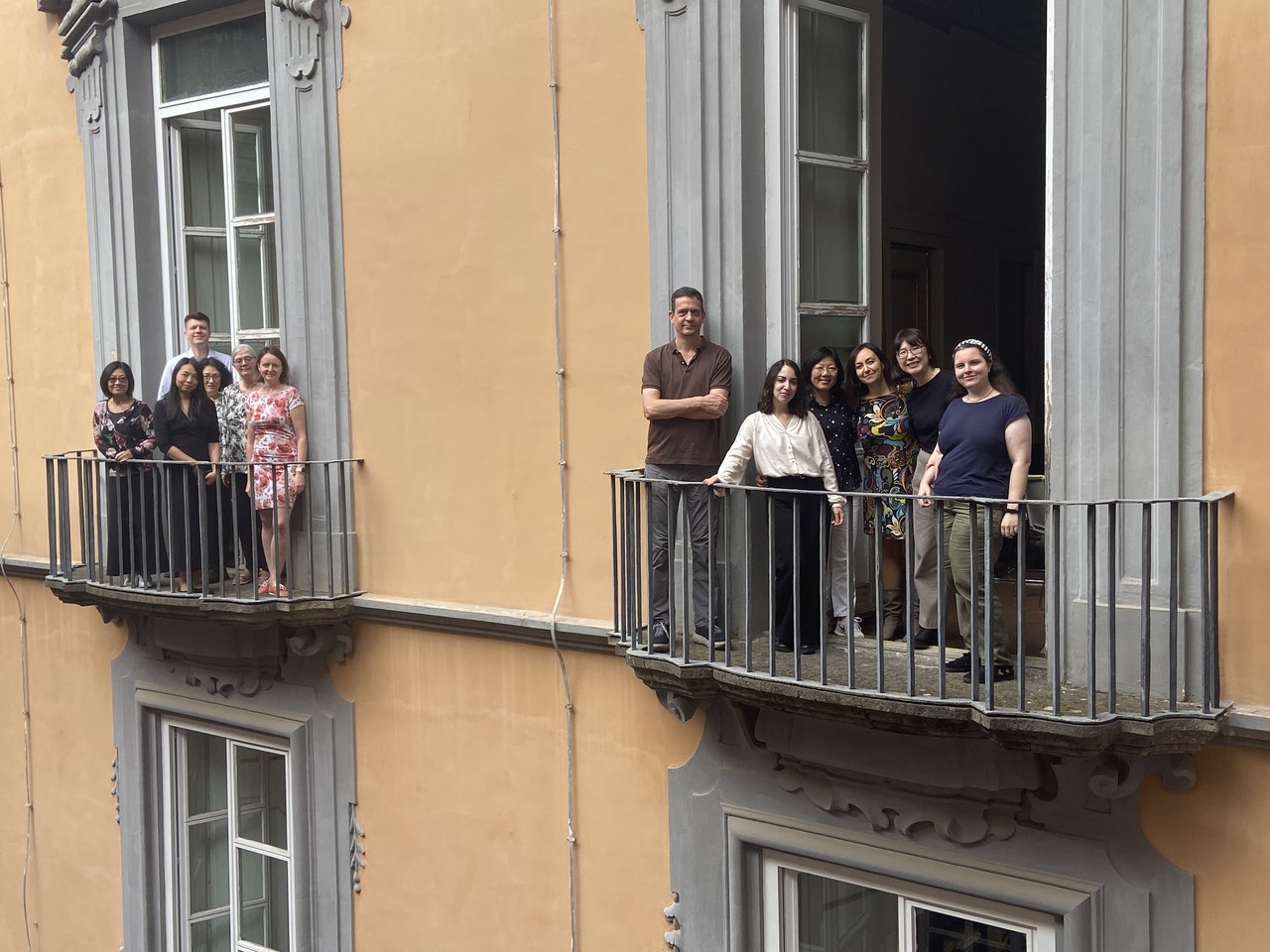
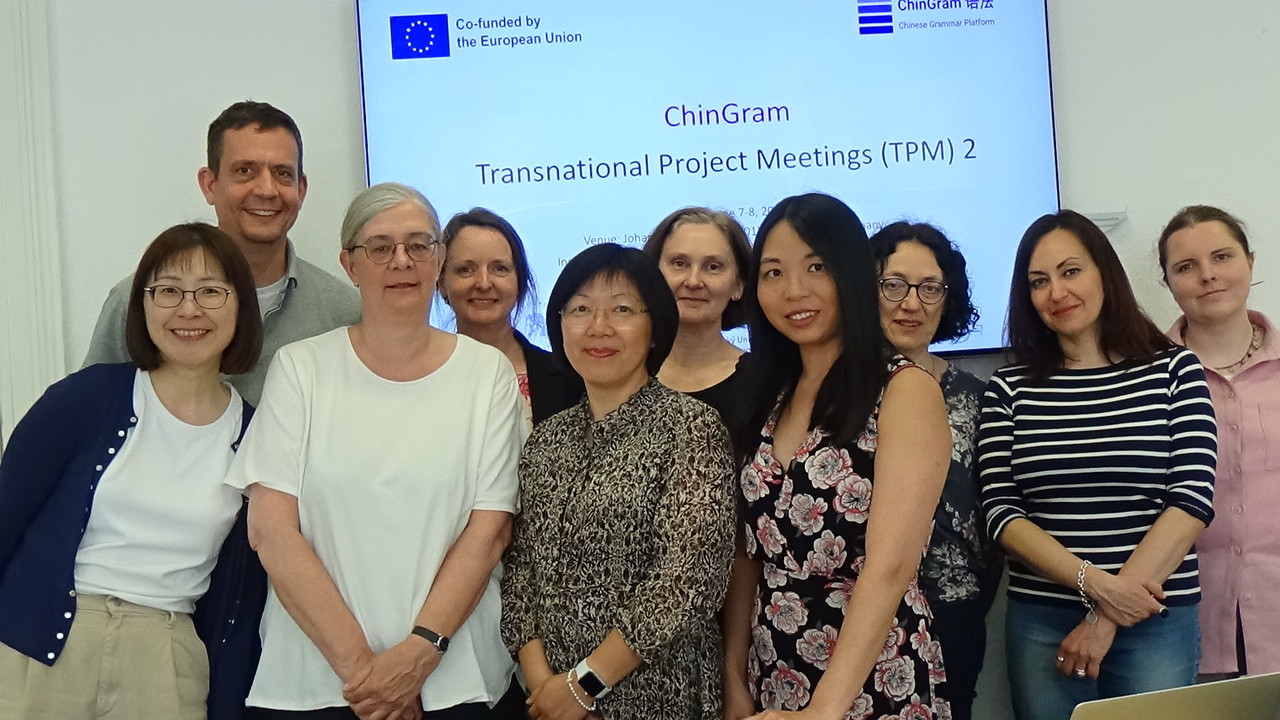
The ChinGram team includes:
Palacký University in Olomouc (Czech Republic): Michaela Zahradníková, Yixuan Jandová Chen
Aarhus University (Denmark): Chun Zhang, Lene Sønderby Bech
Humboldt University of Berlin (Germany): Henning Klöter, Chin-hui Lin
Adam Mickiewicz University in Poznań (Poland): Wisława Szkudlarczyk-Brkić, Halina Wasilewska, Zuzanna Wnuk
Università degli Studi di Napoli “L’Orientale” (Italy): Luisa M. Paternicò, Yao Qion
The team also had to resolve inconsistencies in terminology and select grammatical phenomena essential for the first year of study, the selection of which often varies across textbooks and international exams. Collaboration and the sharing of experiences with John Pasden, the author of the Chinese Grammar Wiki based in Shanghai, were therefore key. A partnership with StoryTribe—a startup developing a web application for creating storyboards—and its CEO, Yunmie Kim, helped establish a consistent graphic design. At this point, the research teams are focusing on completing the basic set of grammatical phenomena. Once this intensive phase is over, the authors plan to submit a follow-up project. “This would help us not only expand the language material covered to include more advanced linguistic expressions, but also bring in new partners and add additional language versions to the website. The platform has been programmed from the outset so that any future expansion requires only minimal investment in development, and the follow-up project can focus primarily on the content itself,“ he explains.
Three years of work by five European teams are now coming to a head— the platform is already available in a working version at chingram.upol.cz, and the project’s results have been presented at several international conferences. Before the project ends, workshops for Chinese language teachers are also being planned. “It was absolutely crucial for the smooth running of the project that we built the partnership on people who knew each other, so we didn’t have to worry about their reliability from the start. The entire project was therefore marked by a friendly and incredibly supportive atmosphere, in which it was a joy to collaborate," concludes Zahradníková.
Chinese Grammar Platform (ChinGram)
The ChinGram project is co-funded by the Erasmus+ KA2 program. It brings together European researchers and Chinese language instructors from five European universities—in Berlin, Aarhus, Naples, Poznań, and Olomouc. Palacký University in Olomouc serves as the lead coordinator of the entire project. Project duration: December 1, 2023 – November 30, 2026. Principal Investigator for UP: Mgr. Michaela Zahradníková, Ph.D., Faculty of Arts – Department of Asian Studies.

Source: ChinGram Archive 3x