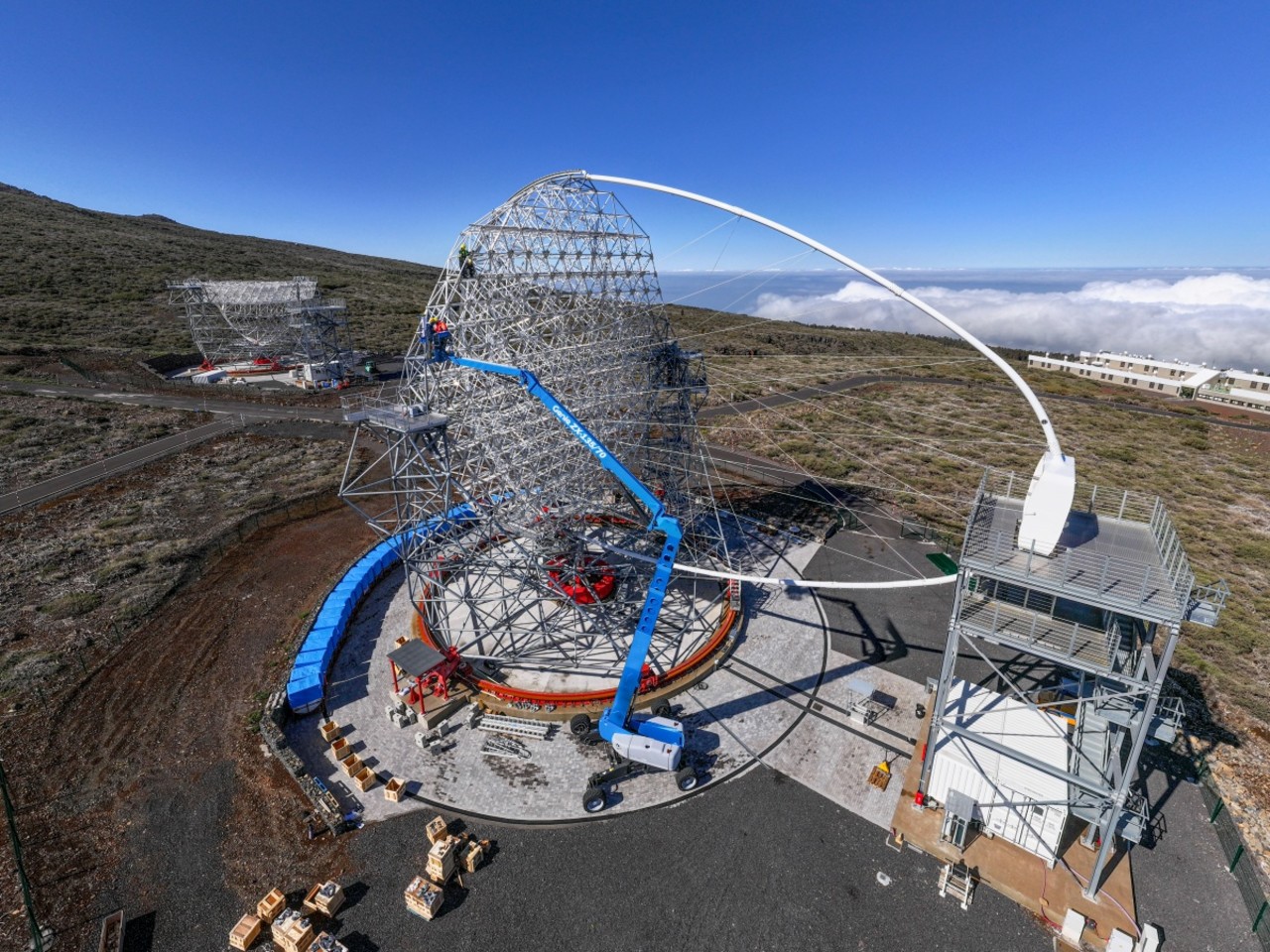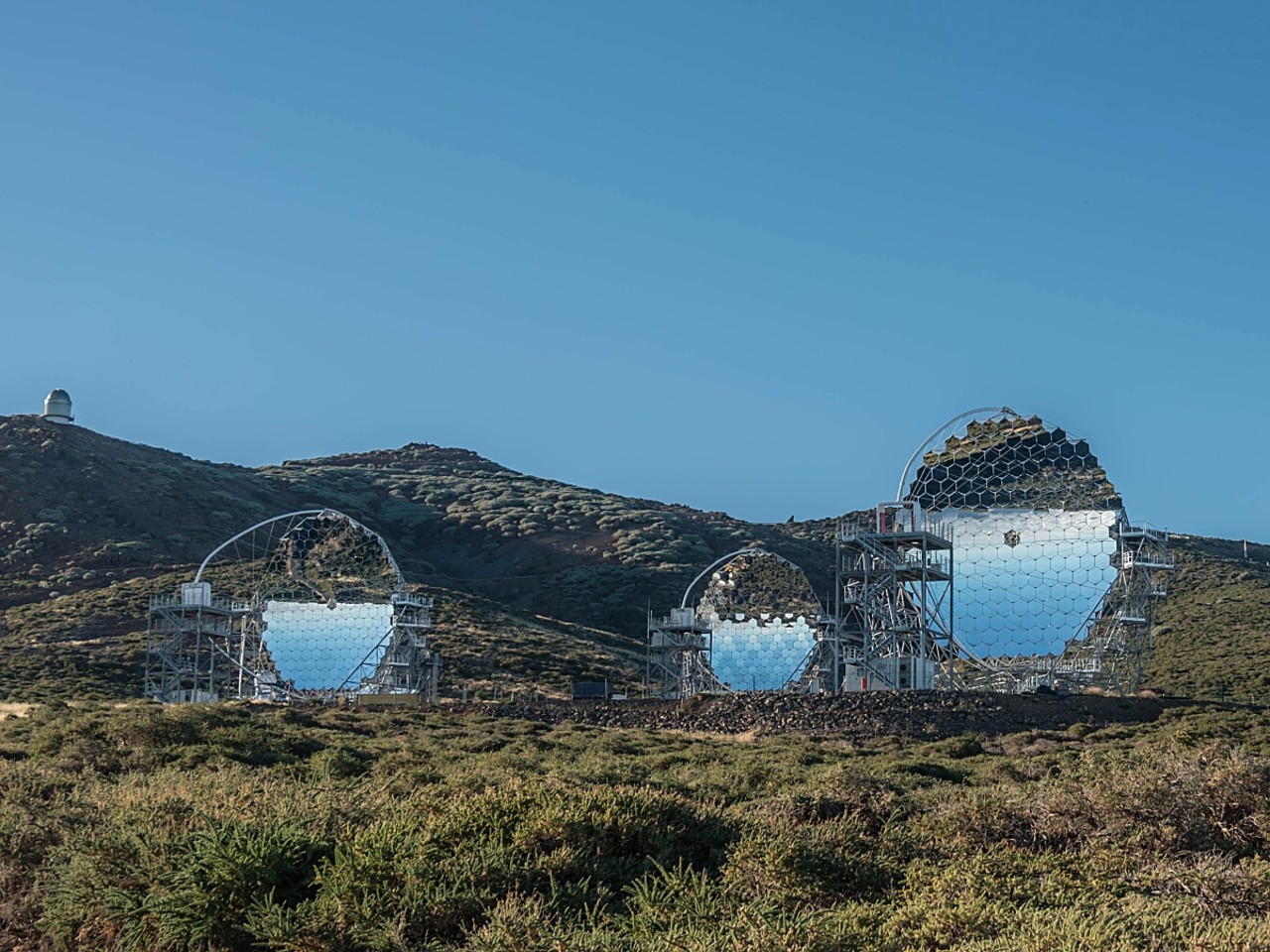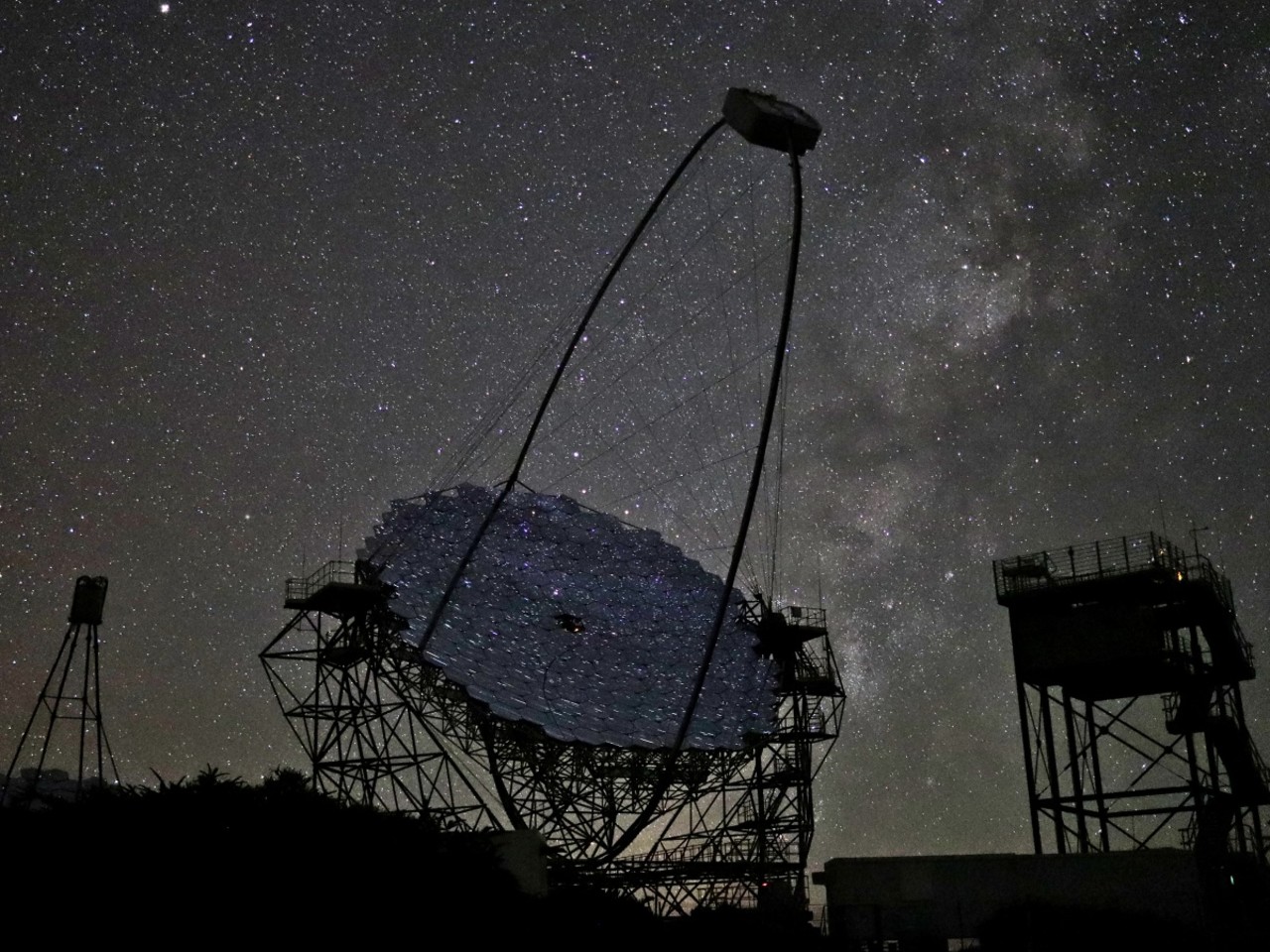
Physicists from the Joint Laboratory of Optics at Palacký University in Olomouc and the Institute of Physics of the Czech Academy of Sciences played a significant role in the construction of a new array of four large LST telescopes, which was officially commissioned at the Roque de los Muchachos Observatory on the Spanish island of La Palma. The Olomouc team is responsible for the optical components of the telescopes and is also involved in developing the methods and equipment that ensure their precise alignment and correct operation during observations. The telescope array will enable astronomers to monitor sources of high-energy gamma radiation with greater sensitivity and accuracy, including very distant and rapidly changing objects in the universe.
The four Large-Sized Telescopes form part of the Cherenkov Telescope Array Observatory (CTAO), currently under construction, which is set to become the largest and most powerful gamma-ray observatory in the world. The completion of their assembly represents an important step towards the observatory’s full scientific operation. The Czech group joined the international LST project in 2021. In addition to Palacký University and the Institute of Physics of the Czech Academy of Sciences, scientists from the Astronomical Institute of the Czech Academy of Sciences and the Faculty of Mathematics and Physics at Charles University are also involved.
“Czech experts are contributing to the construction of the observatory, the analysis of data, and its future operation and maintenance. Our Joint Laboratory of Optics plays a significant role in the project, being responsible for the optical components of the telescopes.” Ladislav Chytka
“Czech experts are involved in the construction of the observatory, data analysis, and its future operation and maintenance. Our Joint Laboratory of Optics plays a significant role in the project, being responsible for the optical components of the telescopes. We are responsible for installing the individual components and developing methods and equipment that enable us to achieve and maintain high image quality over the long term,” said Ladislav Chytka from the Joint Optics Laboratory, deputy coordinator of the group responsible for the optical components of the telescopes.
Experts from Olomouc ensure the precise alignment of the mirrors
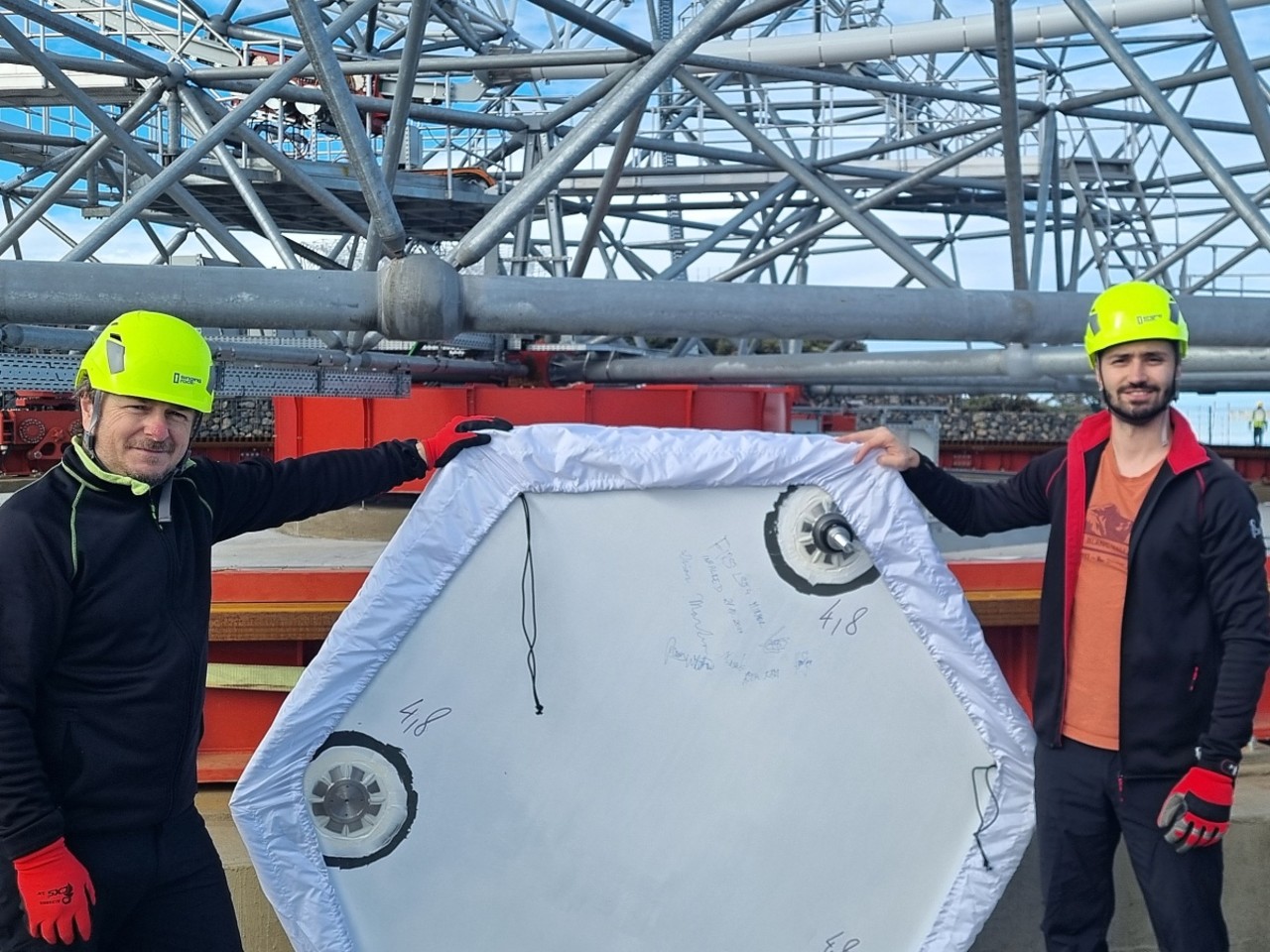
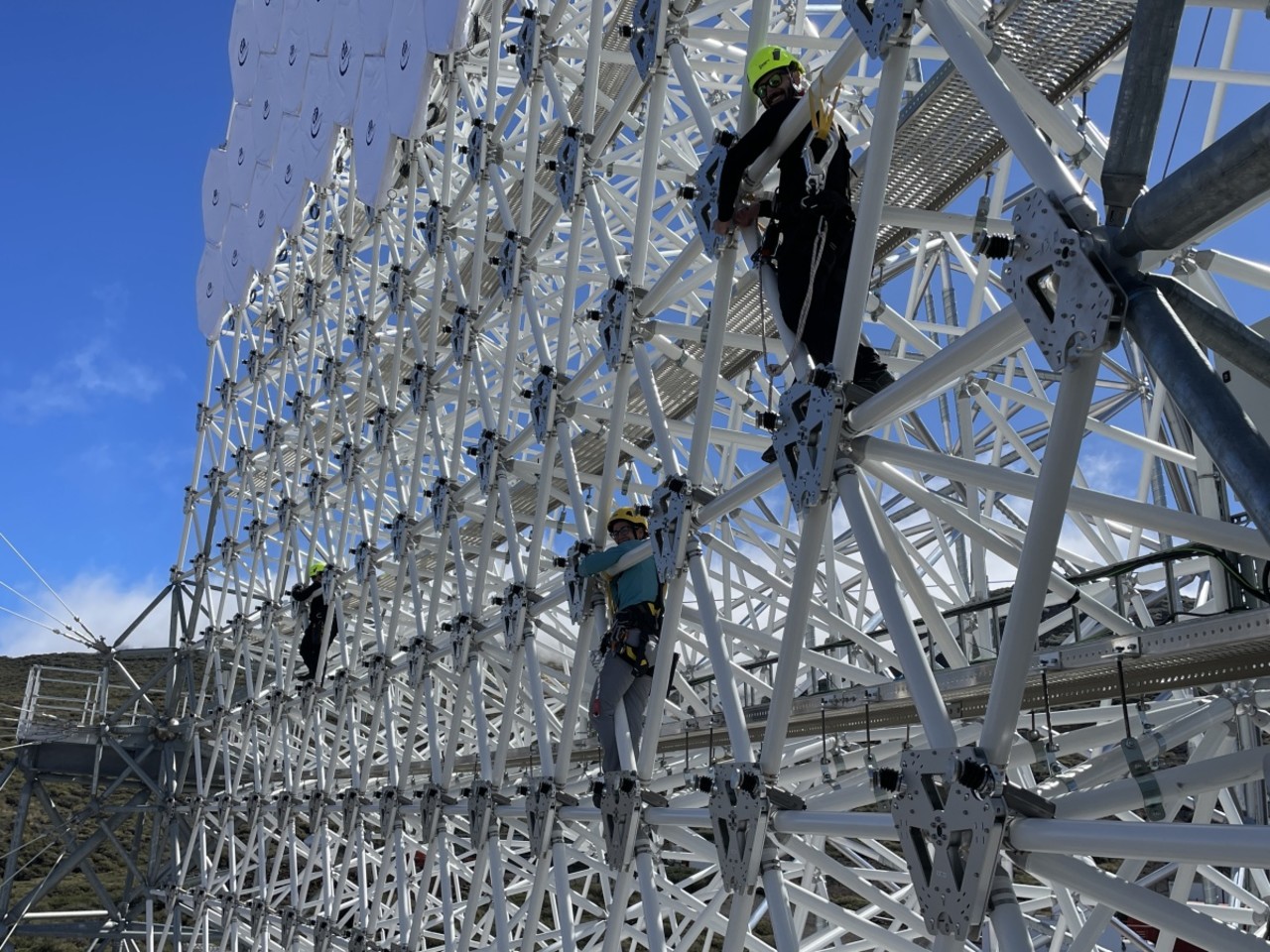
Each of the LST telescopes has a segmented primary mirror with a diameter of 23 metres, comprising 198 individual mirror segments. Their position must be adjusted very precisely during observations, as the telescope’s structure is affected by factors such as gravity and wind.
“An active control system is therefore used to ensure the optimal position of the mirror segments. The Joint Laboratory of Optics in Olomouc is playing a significant role in this part of the project. Image quality is crucial both for the sensitivity of the entire telescope and for the precise reconstruction of the energy and direction of incoming gamma particles,” said Dušan Mandát from the Joint Laboratory of Optics, who is a member of the governing body of the international LST consortium.
foto_sem_4
The LST telescopes are designed to detect very faint flashes of Cherenkov radiation, which are produced when high-energy gamma rays interact with the Earth’s atmosphere. In addition to a large mirror, each telescope is also equipped with an ultra-high-speed camera.
The instruments are most sensitive in the energy range from approximately 20 gigaelectronvolts to several teraelectronvolts. Thanks to their low energy threshold, scientists can observe even very distant sources of gamma radiation and monitor rapidly changing cosmic phenomena.
Four telescopes will enable more sensitive observations of the universe
The first of the telescopes, LST-1, has been operating on La Palma for several years. During its trial operation, it has succeeded in observing, for example, pulsars, active galactic nuclei and transient phenomena, including novae and gamma-ray bursts.
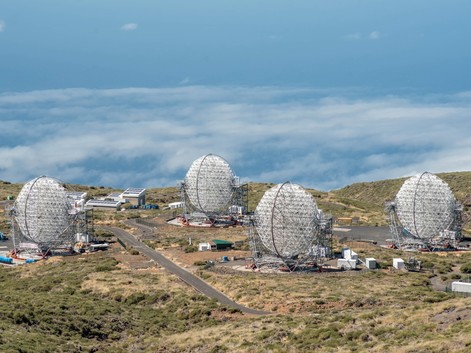
With the completion of the LST-2, LST-3 and LST-4 telescopes, a system of four instruments has now been established. Simultaneous observations of the same particle shower from several different locations will make it possible to increase the sensitivity of the measurements, improve the angular resolution and determine the energy of the original gamma-ray particle more accurately.
“The completion of the LST telescope array is the culmination of more than fifteen years of international collaboration and technological innovation. These telescopes will enable us to study some of the most extreme environments in the universe, including supermassive black holes and neutron stars, to search for the possible origin of cosmic rays, and to investigate the nature of dark matter,” said Masahiro Teshima, principal investigator of the LST Collaboration and spokesperson for the CTAO Consortium.
CTAO will open up new possibilities for space research
The LST array will form part of the northern section of the CTAO observatory on the island of La Palma. Thanks to its high sensitivity to lower-energy gamma rays, it will enable scientists to study very distant objects and look back to a time when the universe was less than two billion years old.
“The completion of the LST telescope array is the culmination of more than fifteen years of international collaboration and technological innovation.” Masahiro Teshima
In future, the CTAO is set to comprise more than 60 telescopes of three different sizes, distributed across two sites. The northern section is being built on La Palma, whilst the southern section is being constructed at the Paranal Observatory in Chile’s Atacama Desert. The combination of different types of telescopes will enable the observation of gamma-ray radiation across an exceptionally wide energy range, from approximately 20 GeV to 300 TeV.
Research will focus, for example, on the origin of cosmic rays, the physics of black holes and neutron stars, and the search for dark matter. The CTAO will also be the first observatory of its kind in the field of gamma-ray astronomy to offer public access to high-level scientific data and software tools.