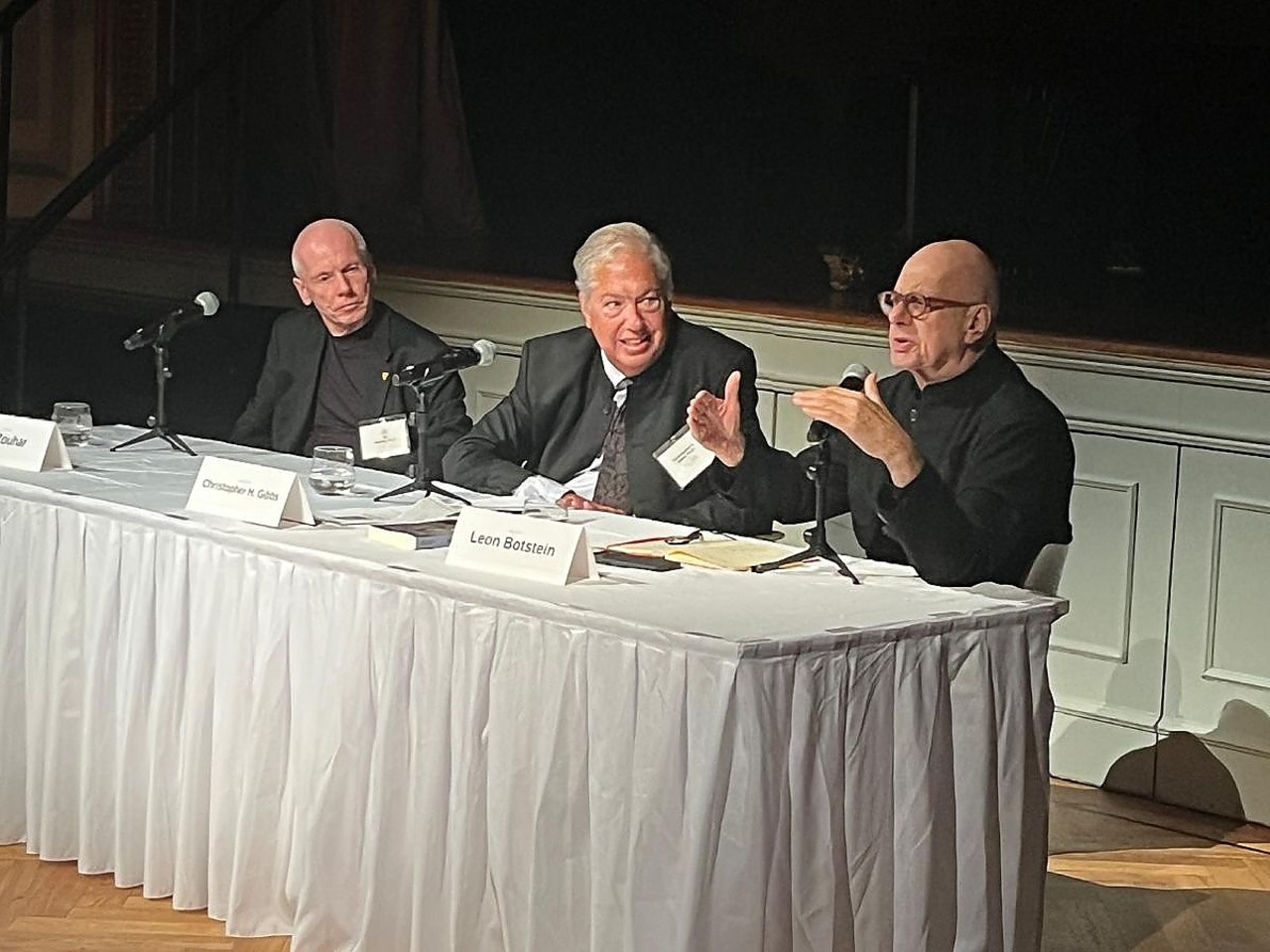
Vít Zouhar, composer, musicologist and Vice-Dean of the Faculty of Education at Palacký University, attended a gala evening in New York dedicated to Bohuslav Martinů and his time in the United States. The event, organised at the Bohemian National Hall by the Bohuslav Martinů Foundation and the Consulate General of the Czech Republic in New York, marked the foundation’s very first appearance on American soil. It featured an expert discussion with leading Czech and American scholars of the composer’s work, as well as a concert performance of the Sonatina for Clarinet and Piano, which Martinů composed in New York seventy years ago. The piece was brilliantly performed by Irvin Venyš and Thomas Sauer.
Vít Zouhar, who is chairman of the board of the Bohuslav Martinů Foundation and editor of the composer’s correspondence, was among the participants in the panel discussion ‘Martinů in America’. The event, which took place on 14 October in The Ballroom at Bohemian National Hall, commemorated the Czech composer’s prominent position in American musical life during the 1940s and 1950s.
“Martinů was not a guest in America, but one of its leading composers. His correspondence shows how strong his ties to this country remained right up until the end of his life. Even whilst still in Europe, he read *The New York Times* and had American music paper sent to him from New York, on which he wrote his scores. He also closely followed every American performance of his compositions,” said Vít Zouhar.
The discussion was moderated by musicologist Christopher H. Gibbs, Professor of Music at Bard College. Alongside Vít Zouhar, the panellists included Michael Beckerman, Dean of the UCLA Herb Alpert School of Music and a leading American expert on Czech music; Leon Botstein, conductor and long-standing President of Bard College; and Aleš Březina, a Czech musicologist and composer who is Director of the Bohuslav Martinů Institute. Together, they offered both Czech and American perspectives on the composer’s work and his ties to the United States.
Sonatina se symbolicky vrátila do New Yorku
The musical highlight of the evening was a stirring performance of the Sonatina for Clarinet and Piano H 356, which Martinů composed in New York in early 1956. The piece was performed by clarinettist Irvin Venyš, director of the Bohuslav Martinů Foundation and associate professor at the Faculty of Music and Dance of the Academy of Performing Arts in Prague. He was accompanied on the piano by the American pianist Thomas Sauer, a lecturer at the Mannes School of Music in New York, where Martinů had also taught in the past.
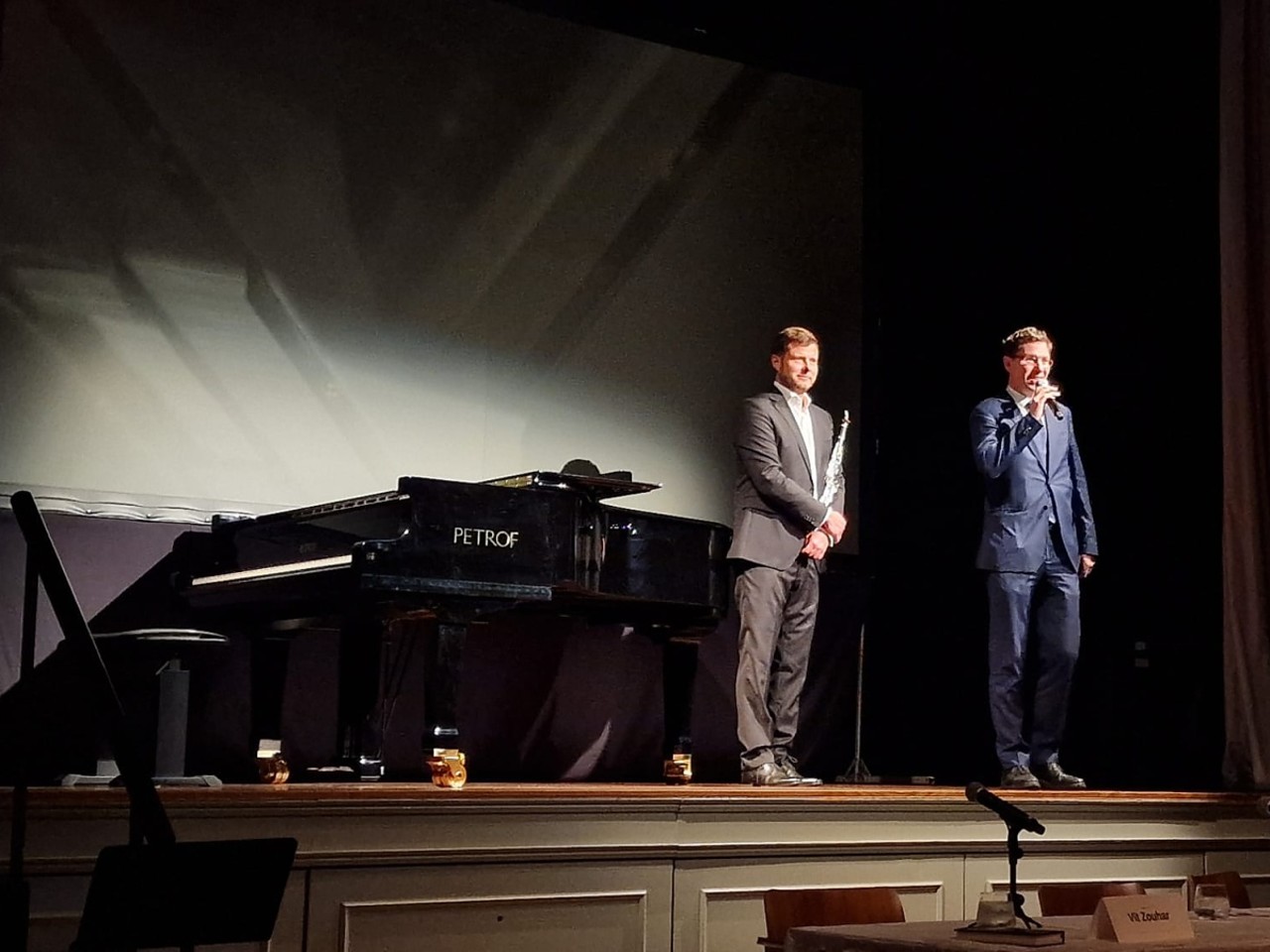
“Martinů wrote this Sonatina in New York. Playing it here feels to me like bringing it home,” said Irvin Venyš, capturing the symbolism of the concert.
There was also a personal story behind the composition’s creation. Martinů wrote it as a gesture of friendship to help his biographer Miloš Šafránek, who was facing financial difficulties at the time. He intended to give the fee for the composition – which he had offered to the Parisian publisher Alphonse Leduc in 1956 – to Šafránek. The Sonatina later became an integral part of the clarinet repertoire.
Martinů and his American years
The New York evening also marked the seventieth anniversary of the moment when Bohuslav Martinů left the United States for good. He arrived in New York in March 1941 after fleeing from occupied France, and America became his home for many years. All six of his symphonies were composed there; he also taught at Princeton University and Mannes College of Music, and in 1952 he became an American citizen.
The conductor Serge Koussevitzky played a significant role in his American career; he premiered his *Concerto grosso*, invited him to teach at Tanglewood, and commissioned his First Symphony. Martinů gradually became one of the most frequently performed composers in the United States. He returned to New York in the mid-1950s and left America for good with his wife Charlotte on 4 May 1956.
The gala evening, opened by Karel Smékal, Consul-General of the Czech Republic in New York, thus commemorated not only the American chapter of Bohuslav Martinů’s life, but also the enduring interest of Czech and international experts in his musical legacy. Vít Zouhar of Palacký University has also been making a long-standing contribution to the study and dissemination of Martinů’s work through his musicological research and his role as editor of the composer’s correspondence.