I recently visited six cities and eight universities in Ukraine and would like to share some of my experiences. Some of you might recall my previous reports on earlier visits. Thanks to the support of our university and my faculty and department I have been able to visit this war-torn country on a regular basis. This was actually my second visit this spring as I had earlier visited Lviv, Kyiv and Ivano-Frankivsk with two colleagues from University of California in March for a one-week tour.
This latest, three and a half week trip, was partially financed by Erasmus+ (I encourage you to look into this by the way) and partly by FF UPOL.
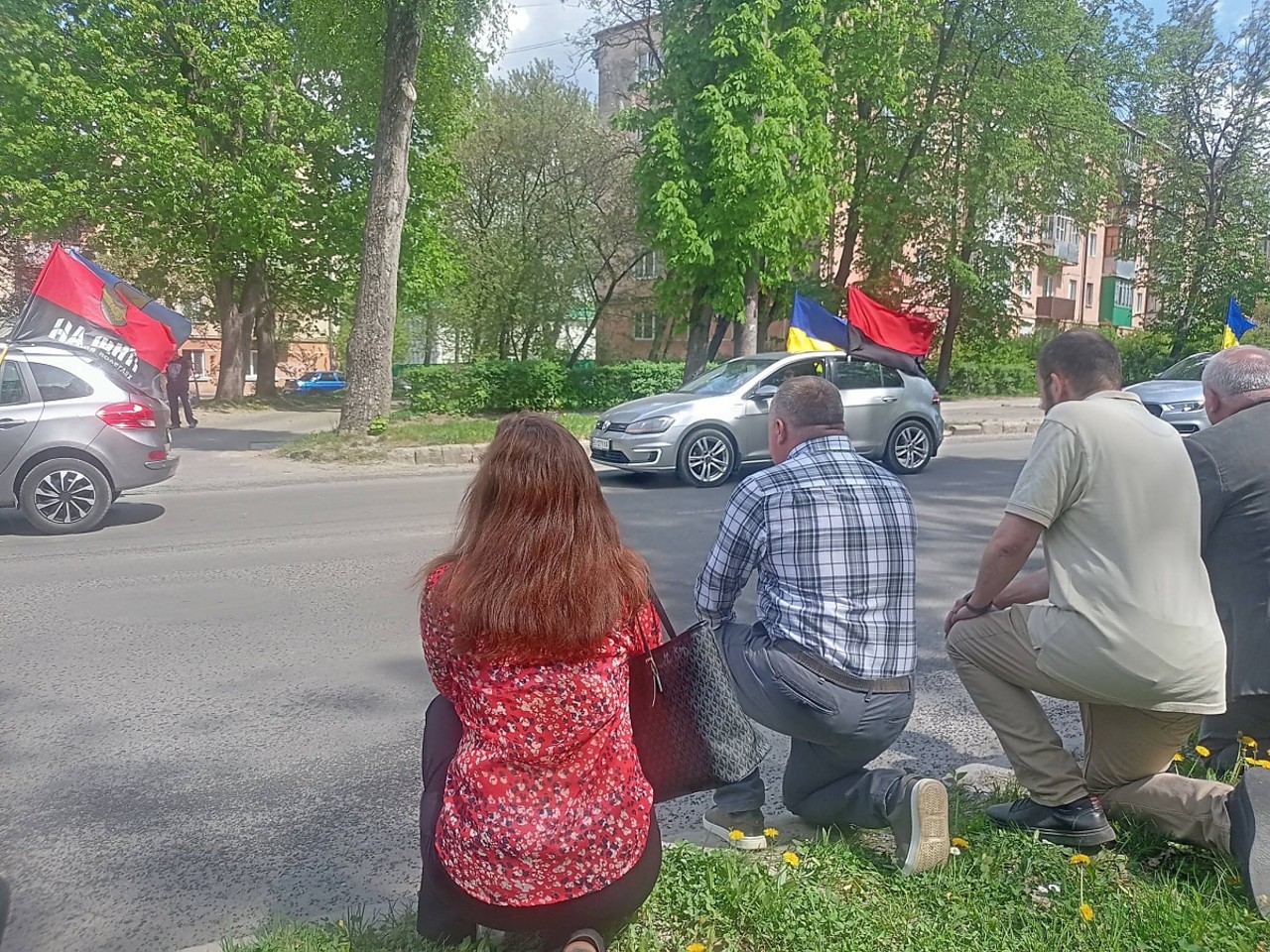
My trip began in the city of Ternopil where I visited Volodymyr Hnatiuk National Pedagogical University for the third time. I presented there, and elsewhere, a talk focused on parallels between Irish and Ukrainian history and culture, specifically the shared experience of famine, loss of language and identity and the respective national revivals with, of course, inevitable additional references to affinities with the Czech Lands. After my first talk at their English department, we headed to another building where I was to speak to students of theatre and music studies (I brought my banjo with me and had prepared some relevant Irish songs). I was told we would first participate in a homage to a former student who had just died in the war. A group of teachers and students stood by the side of the road and waited for a funeral procession of cars to drive by (see the picture below). Everyone knelt out of respect and maintained a dignified silence. When the procession passed, everyone stood up, many of them with tears in their eyes. We headed back to the university building, some colleagues hugging and holding hands. Although this is unfortunately quite a regular occurrence, I was struck by how genuine people’s participation seemed to be and by the fact that they immediately, dried their eyes, and went back to work. This remarkable resilience characterized my entire visit. Despite there being no end to the war in sight, despite the mounting numbers of casualties (each village in the country has posters honoring local soldiers who have perished), despite betrayal and/or indifference from supposed allies in the West, Ukrainians continue to put one foot in front of the other and persevere.
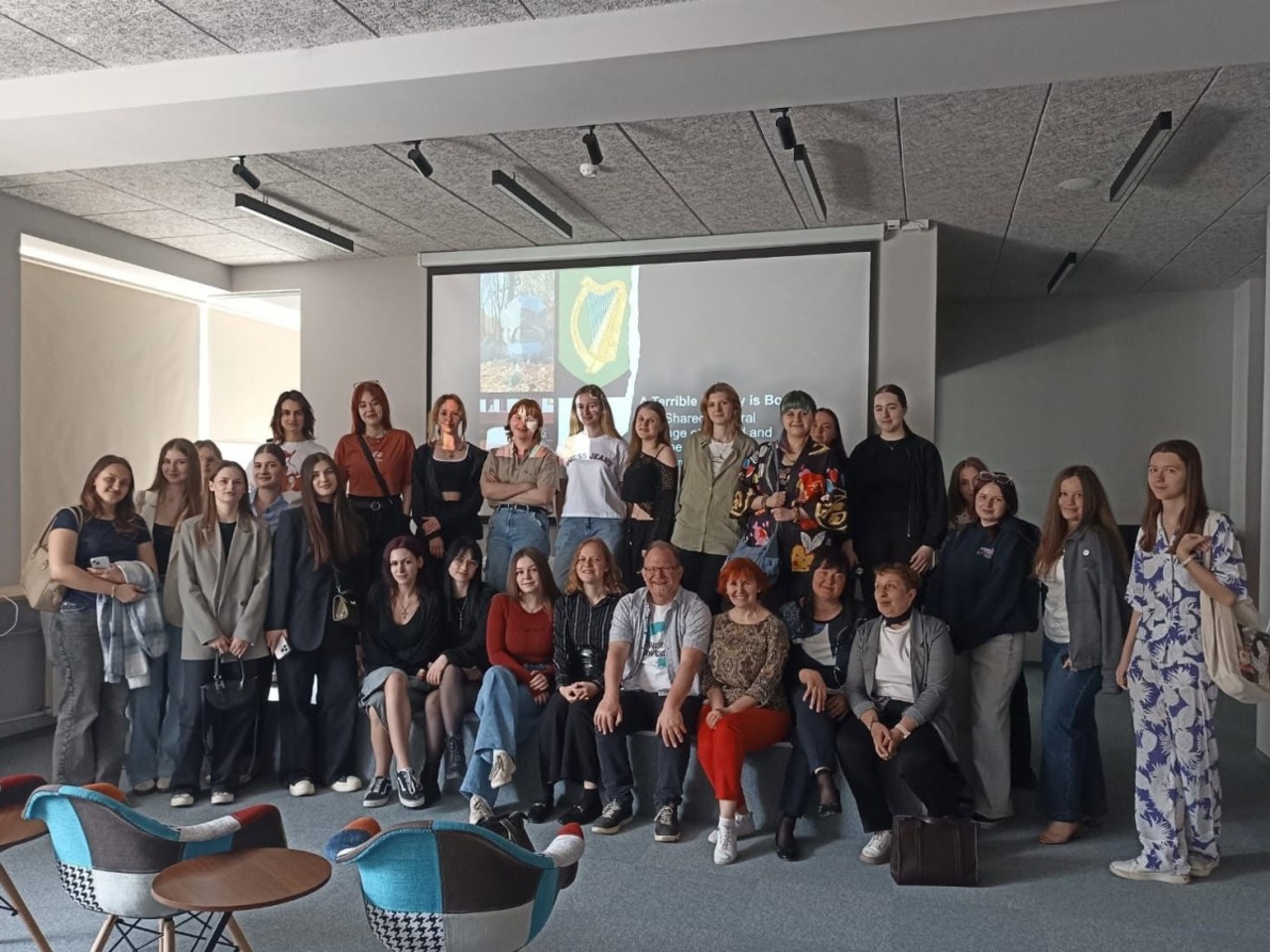
My next stop was Kyiv where I visited another partner school Borys Grinchenko Metropolitan University (see picture) and attended the final performance of the Ukrainian staging of the Irish play Translations by the dramatist Brian Friel. I was accompanied by a colleague from Ternopil, Olha Dovbush, as we have been writing an academic article about the Ukrainian translation and performance and how this play about British colonization of Ireland, and the beginning of the destruction of the native language, has met with a strong response in Ukrainian. This will be the fourth academic article I have co-authored with a Ukrainian academic, this being a venture which I would encourage more of you to explore. Ukrainian academics make the equivalent of around 300 Euro per month, teach up to 20 hours per week at university, have additional administrative duties of course, often have second jobs to pay the bills and are expected to publish in impact journals. One way we can help is co-authoring articles and thereby encourage and support their scholarship.
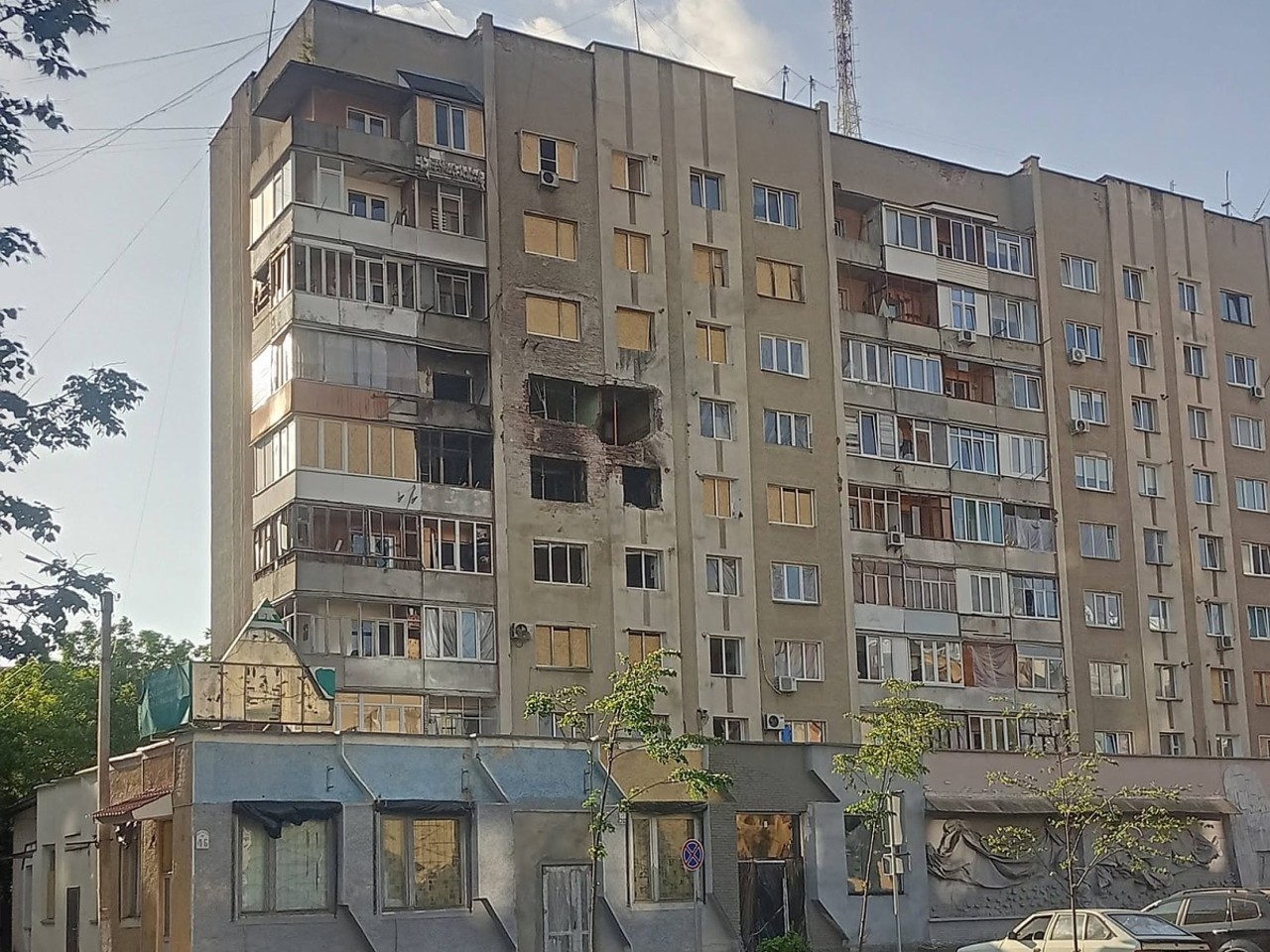
After a peaceful two days in Kyiv (I was there during the anniversary of the end of World War Two when a very brief cease-fire was in place) I headed back west to Lviv where I spent a week on an Erasmus exchange at Lviv Polytechnic University with additional talks at Ivano Franko National University. I then moved south to Ivano-Frankivsk for another Erasmus stay at my home-away-from-home Vasyl Stefanyk Carpathian National University. I stayed in one of the university dormitories once again, only a few blocks away from the site of a bombing of a block of flats several days earlier (see picture). Although Western Ukraine is definitely much safer than cities further East, bombings have become more frequent of late. A father and daughter were killed in Ivano-Frankivsk during my previous visit in March and my colleagues and I were extremely close to the shelling of a church in the centre of Lviv on the same day.
During my stay, I also paid a short visit to Yuriy Fedkovych National University in Chernivti (my third visit) and to a new university, Ivan Ohiienko National University, in the lovely historical city of Kamianets-Podilskyi. I also visited administration staff from Kherson National University which has been relocated to Ivano-Frankivsk since the outbreak of the war.
I was able to renew old friendships and make new ones. As always, I have been honored and moved to share my life and work with Ukrainian teachers and students. I deeply admire how these colleagues of ours persevere despite little light at the end of the tunnel and despite “running on empty” as the title of my report reads. I occasionally wonder if my visits really make that much sense, but realise that visits from colleagues from the West do make a difference during these dark times. I would encourage readers of this report to look into how you might also contribute in some way to this work involving academic solidarity.
David Livingstone